


Engineering Meets Solar Cycling: Teys Cocset and Frédéric Verrons Visit PHOSGO
Test rides and conversations brought fresh perspectives on PHOSGO’s riding experience and the possibilities of solar-assisted cycling.
On October 19, 2026, PHOSGO welcomed solar bicycle engineers Teys Cocset and Frédéric Verrons for a visit featuring product discussions, test rides, and interviews. The exchange brought together a shared interest in bicycle engineering and solar mobility, with an opportunity to experience PHOSGO’s approach first-hand.
For the PHOSGO team, the visit was a chance to connect product development with outside experience. Exploring a bicycle together, taking it onto the road, and discussing the ride afterwards creates a useful connection between engineering decisions and the way those decisions feel to a rider.
During his recorded interview, Teys recognised improvements in the bicycle, commented positively on its motor and brakes, and expressed enthusiasm for the solar-assisted concept. His observations offered an encouraging perspective on both the riding experience and the potential appeal of integrating solar energy into everyday cycling.
Experiencing PHOSGO on the Road
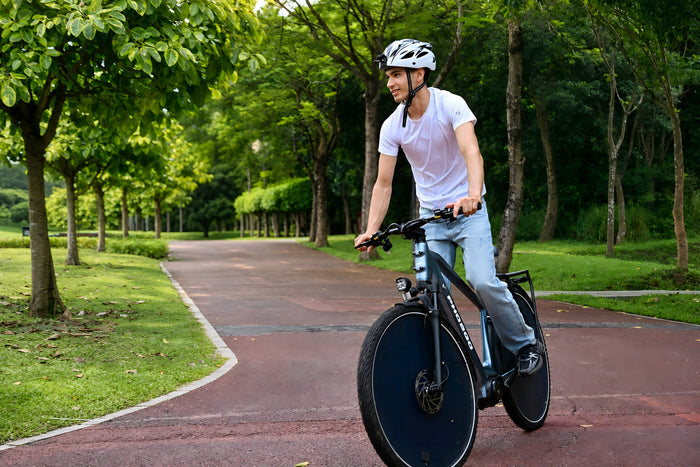
The visit included an outdoor test ride, giving Teys the opportunity to experience the bicycle beyond a product introduction. Wearing a helmet, he rode a PHOSGO step-through bicycle along a paved route before sharing his impressions beside the bike.
That hands-on experience gave the conversation a practical focus. The bicycle’s motor, brakes, frame, and solar wheel panels were all there to examine and discuss, connecting the interview directly to the product he had just ridden.
For a solar-assisted bicycle, this complete experience matters. The solar technology may be the first feature to attract attention, but the feeling of riding remains central. Assistance, braking, and the overall interaction between rider and bicycle all contribute to how the concept translates into use.
Teys’s comments reflected that broader perspective. He discussed the bicycle as a complete riding experience, alongside his interest in its solar features.
Positive Feedback on Motor Performance
One of the highlights of the interview was Teys’s response to the mid-drive motor.
Discussing the system fitted to the test bicycle, he identified it as a Bafang M430 and described the ride positively:
“It’s quite powerful and fast, and generally very pleasant to ride.”
His response connected the technical discussion to an immediate experience on the road. For riders, a motor is more than a component listed on a specification sheet; it contributes to how the bicycle responds and how enjoyable the journey feels.
Teys’s assessment was encouraging because it addressed that experience directly. His comments highlighted both the assistance he felt and his enjoyment of the ride, bringing a rider’s perspective into the engineering conversation.
For PHOSGO, developing a solar-assisted bicycle also means paying attention to these familiar expectations of an electric bike. Solar integration forms part of the product, while a pleasant riding experience gives people a reason to use it in their daily lives.
Recognising Improvements in the Bicycle
Teys also recognised progress when discussing the bicycle in relation to an earlier prototype.
He noted that several components had been improved, including the motor and brakes. His comments on braking were particularly clear:
“The brakes have also been improved, and they’re quite good now.”
This feedback provided an encouraging acknowledgement of the work reflected in the bicycle he tested. It also brought attention to an essential part of the riding experience: the interaction between electric assistance and the bicycle’s core mechanical systems.
Product development involves many individual choices, but riders experience those choices together. The motor and brakes are part of the same journey, contributing to the way a bicycle feels as it moves along a route.
The interview gave PHOSGO an opportunity to hear how those elements were perceived after a real ride. Teys’s positive observations helped make that progress tangible.
An Enthusiastic Response to the Solar Concept
Beyond the riding experience, Teys responded positively to the idea of solar-assisted cycling itself.
“I think it’s a great concept,” he said during the interview.
The conversation explored the appeal of receiving solar input while riding and why that possibility could interest potential customers. It brought the discussion back to the central idea behind PHOSGO: integrating an additional source of energy into the bicycle.
Solar cycling invites people to think differently about the relationship between a journey and the environment around it. For PHOSGO, exploring that relationship is part of the product’s appeal—bringing solar technology into a form of transport that people can ride, experience, and understand directly.
Teys’s enthusiasm offered an encouraging response to that direction. His interest extended beyond the appearance of the solar components to the role the concept might play in someone’s riding routine.
Considering Everyday Riding
The interview also touched on shorter daily journeys, including commuters travelling only a few kilometres.
Teys’s remarks highlighted this as an interesting application for solar-assisted cycling. It opened a conversation about how the concept could fit into familiar routines: travelling to work, making a local trip, or enjoying a short ride.
This everyday perspective is valuable. A new approach to cycling becomes more meaningful when people can imagine where it fits into their own lives. The discussion connected the engineering concept with those practical possibilities.
The appeal of solar assistance can therefore be considered alongside the enjoyment of the bicycle itself. A pleasant ride encourages people to get on the bike, while the solar concept adds another reason to be curious about the experience.
The visit brought those two aspects together through direct riding and conversation.
A Shared Interest in the Future of Solar Cycling
Welcoming Teys and Frédéric created an opportunity for PHOSGO to exchange ideas with people who share an interest in solar bicycles and their development.
The combination of discussion, test rides, and interviews made the visit especially valuable. It allowed technical subjects to be explored alongside personal riding impressions, bringing different perspectives into the same conversation.
Teys’s recorded feedback captured several encouraging themes: enjoyable motor assistance, recognition of component improvements, positive comments on the brakes, and enthusiasm for the solar concept.
For PHOSGO, these observations provide motivation to continue developing the connection between solar technology and an enjoyable bicycle experience.
We thank Teys Cocset and Frédéric Verrons for visiting PHOSGO and taking part in the rides and conversations. Their visit was a welcome opportunity to share our work, hear outside perspectives, and explore a common interest in the possibilities of solar-assisted cycling.
Share:
PHOSGO Completes 600 km in 5 Days at The Sun Trip 2026 in China
Ride the Sun: Join Our Shiyan Lake Cycling Event on November 8